
As we transition into the winter months, it is important to refocus on the seasonal hazards that accompany colder weather. Winter brings unique challenges, including icy roads, unpredictable storms, increased heating needs, and more time spent indoors. At SAM, safety is a core value, and that commitment extends beyond the job site. By staying aware and taking a few proactive steps, we can help keep ourselves, our families, and our communities safe throughout the season.
Severe Weather Awareness
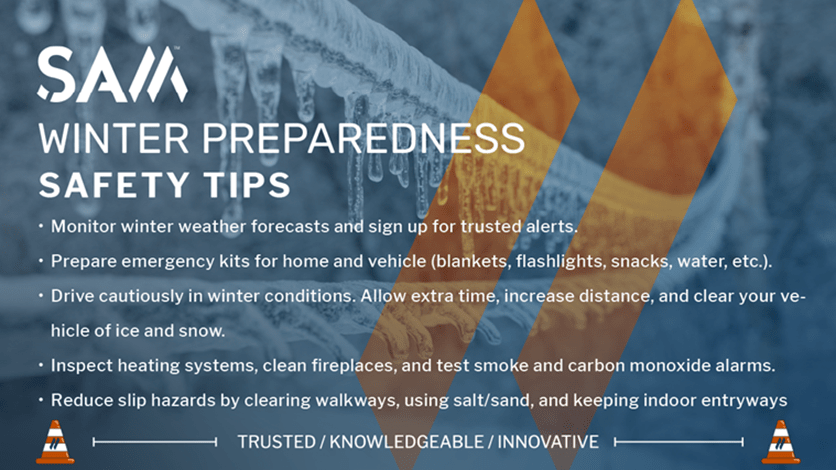
Winter storms can develop quickly, bringing snow, freezing rain, and strong winds that disrupt routines at work and at home. Monitoring local forecasts and signing up for weather alerts through trusted channels can help you prepare. Assemble an emergency kit with essentials such as flashlights, batteries, blankets, snacks, and water in case of power outages or travel delays. If you rely on prescription medications or other critical supplies, consider keeping a small reserve on hand during peak storm periods.
Safe Winter Driving
Road conditions can deteriorate rapidly during winter weather events. Before driving, clear your vehicle of frost, snow, and ice to ensure full visibility. Allow extra travel time, increase your following distance, and adjust your speed to match road conditions. Check your tires for adequate tread and proper air pressure, as colder temperatures can cause pressure levels to drop. A vehicle emergency kit—complete with a blanket, ice scraper, jumper cables, and a small shovel—adds an extra layer of preparedness. Whenever possible, avoid travel during severe weather advisories.
Home Heating and Fire Safety
As temperatures fall, heating systems work harder both in the workplace and at home. Make sure your furnace or heating unit is inspected and functioning properly before the coldest weather arrives. If you use space heaters, keep them at least three feet away from flammable items and never leave them unattended. Fireplaces and wood-burning stoves should be cleaned and checked for proper ventilation to prevent chimney fires and carbon monoxide buildup. Test smoke detectors and carbon monoxide alarms monthly, and replace batteries as needed.
General Winter Preparedness
Shorter days and colder conditions can increase the risk of slips, trips, and falls—both on SAM project sites and in your own driveway. Keep walkways, stairs, and entryways clear of ice and snow, and use salt or sand to improve traction. Indoors, place mats near entrances to reduce wet, slippery surfaces. Dressing in layers, staying hydrated, and taking breaks when working outdoors help protect against cold-related illnesses such as hypothermia and frostbite.
At SAM, safety is more than a workplace requirement—it is a mindset that protects our people, our clients, and our communities. Thank you for taking winter safety seriously and for doing your part to ensure a healthy, safe, and warm season for all.